
 Castle Building Games Online: Construct a Medieval City
Castle-building games that involve the construction of a medieval city are a fun way to learn about the middle ages, a historical period when castles were built and kingdoms were forged. These hand-picked PC games will immerse you in medieval times while you construct various building structures and defenses, conduct wars and sieges, and expand your empire. We regularly update this list with newly released titles too.

Free to Play PC Games
Forge of Empires
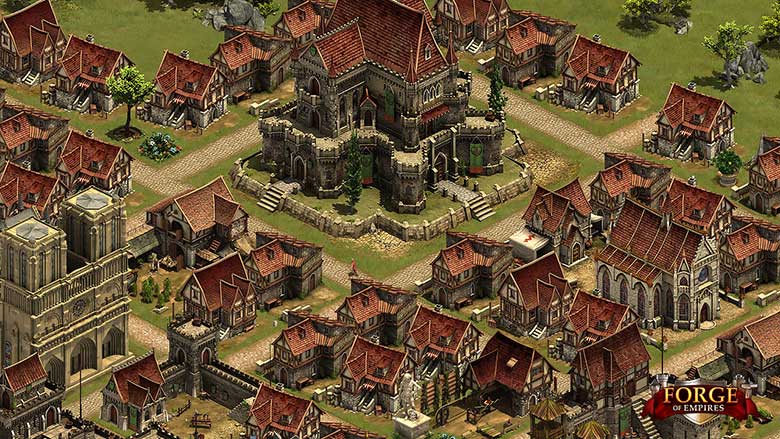
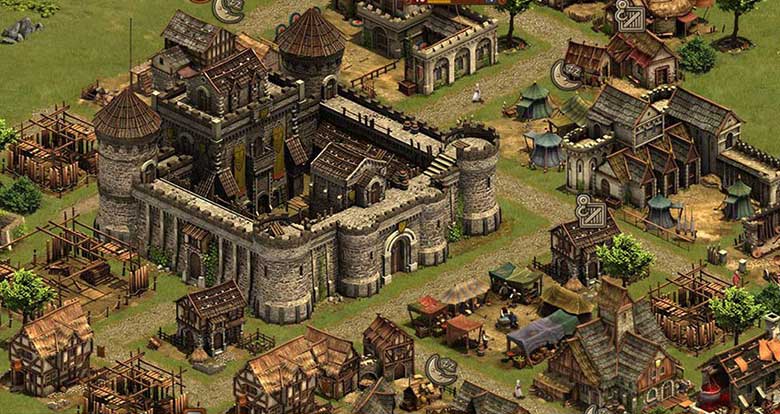
Forge of Empires is a medieval city-building and strategic empire game based in three middle-age periods as well as many other ages. The medieval section of the game, which comprises a large amount of content, features the early, high and late middle ages with different buildings, technologies and warfare units to research and construct. Amongst those are the Town Hall Castle, the Castel del Monte, St. Mark's Basilica and Notre Dame. FOE is a game based around the entire medieval period, so there are many buildings and technologies to explore. As the leader of your thriving city you need to maintain a healthy economy and strong defenses while looking to expand into other territories by defeating real opponents with their own empires online.
Tribal Wars 2
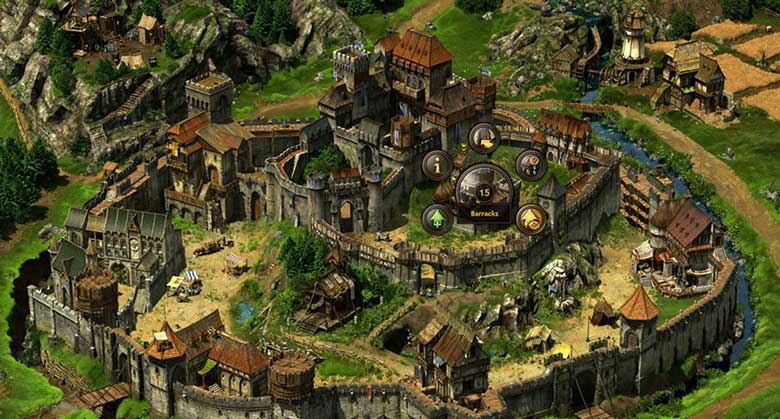
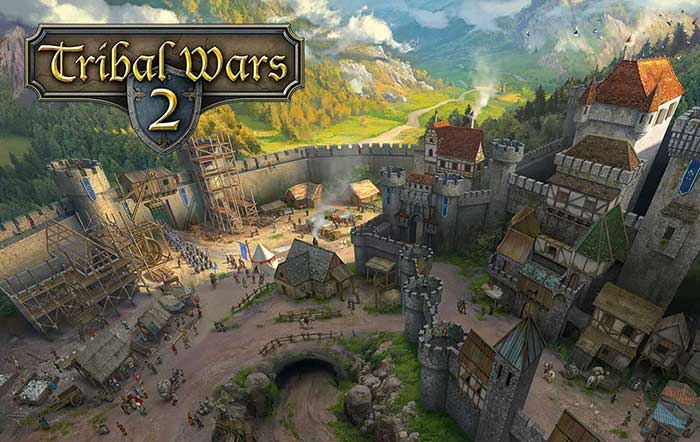
Tribal Wars 2 is a free medieval strategy game in which you are the ruler of a castle in a war-ravaged landscape. You must defend and expand your realm to ensure its survival and ultimate success. Your followers rely on your strength and strategic decisions to fend off rivals while you build your castle empire. Build your armies, fortify your castle walls and lead your soldiers to empire glory!
Which castle-building game should you play?
Short on time? Here is the best pick in each category before you dive into the full reviews below.
Build and expand a medieval empire in your browser
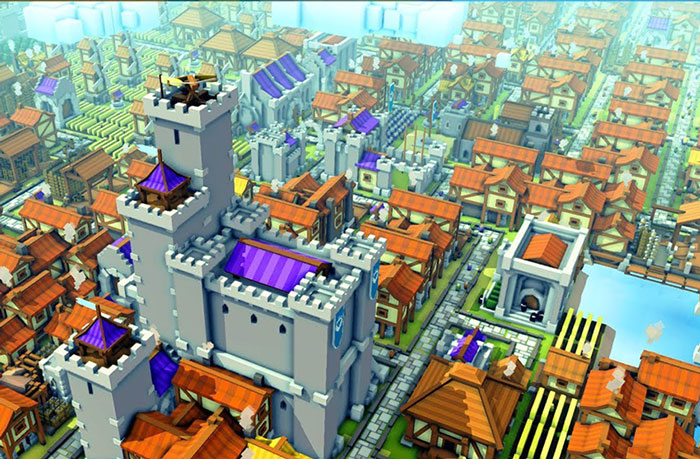
Deep, satisfying castle and city building
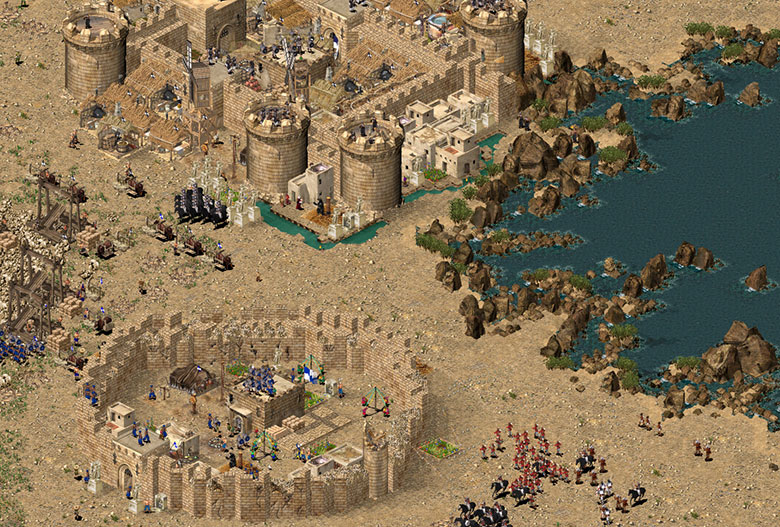
Siege-focused real-time strategy
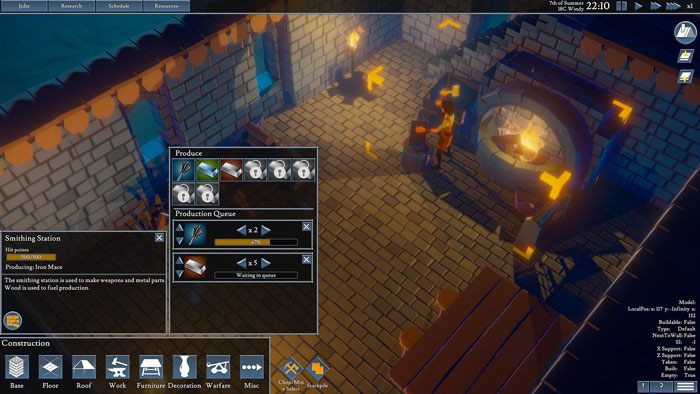
Colony survival with castle building
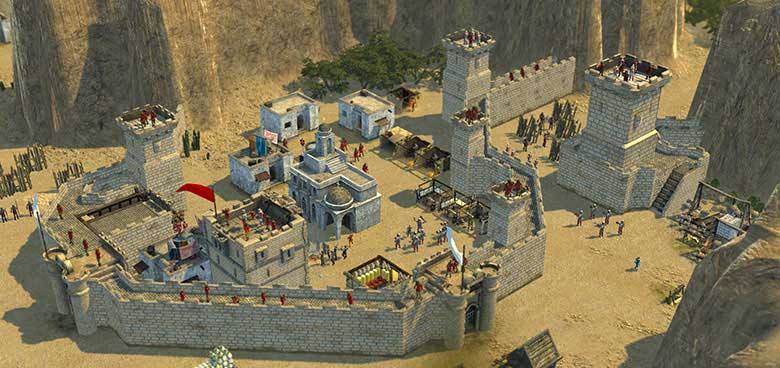
Skirmish and co-op siege battles
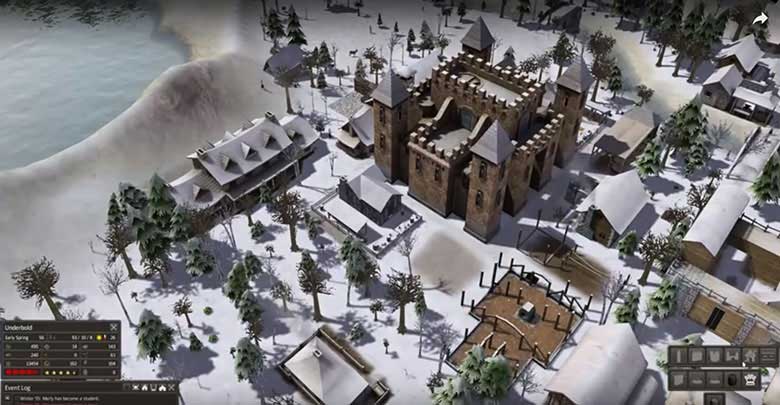
Minimalist survival city-builder
Paid PC Games on Steam and GOG
Going Medieval
Going Medieval is a castle-building game and medieval settlement sim by Foxy Voxel, set at the end of the 14th century after the Black Death and the crusades. After launching into Steam Early Access in June 2021, it left Early Access and reached its full 1.0 release on 17 March 2026. It is a personable settlement-building game that puts you in charge of your own group of survivors. To protect them and ensure their happiness you design and expand your settlement from typical materials such as clay, wood and stone, with the ultimate goal of developing a sprawling stone castle capable of surviving sieges from barbarians and religious fanatics. Your defenses will not just rely on a solid castle structure; you also deploy traps and archers to aid your cause.
Within the confines of your community and defenses your village comes to life as you observe individual behaviour and stories, and you will need to keep your people happy through various basic means. You will need to feed them and provide comforts such as good sleeping quarters and entertainment. The game shares some characteristics with The Guild 3, though it is more of a hybrid medieval sim and castle builder.
Find out more at Steam.
Age of Empires II: Definitive Edition
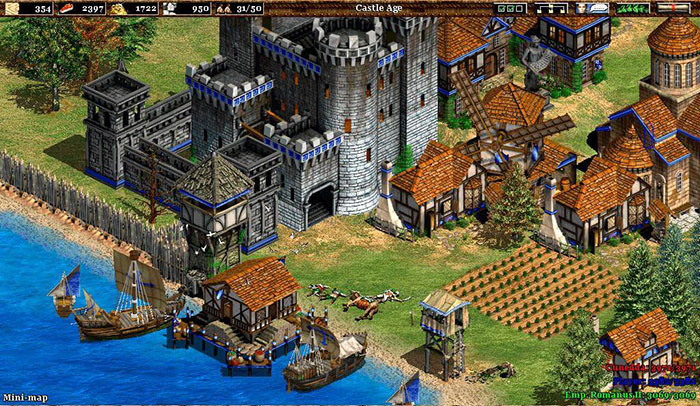
For its 20th anniversary the classic kingdom-building strategy game got a 4K HD upgrade with visually impressive graphics, a new soundtrack and, to top it off, four new civilizations to build from the ground up. Of course, at the heart of the game still remains the middle-ages period, with 13 different civilizations to play through (the biggest of any game of its genre) where you can build your own medieval empire, castle included.
What makes Age of Empires so special is its outward focus, not just on building a fort but on the strategy you adopt in order to expand your empire and wage war on others. It offers an elaborate and immersive campaign experience.
Play Age of Empires II: Definitive Edition at Steam.
Kingdoms and Castles
Initially released in 2017, this is one of the highest-rated castle simulation and city builders on Steam, and it is easy to see why. It strikes the right balance between accessibility, so you do not feel overwhelmed learning how to build, and depth, so avid building fans can construct the serious castle empire of their dreams. It is a single-player experience with no official multiplayer.
Behind the successful construction of your castle is the happiness of your kingdom's people, or 'peasants' as they are known in the game. Caring for your people is key to collecting enough resources from them to keep building on your castle structure.
Total War: Medieval II
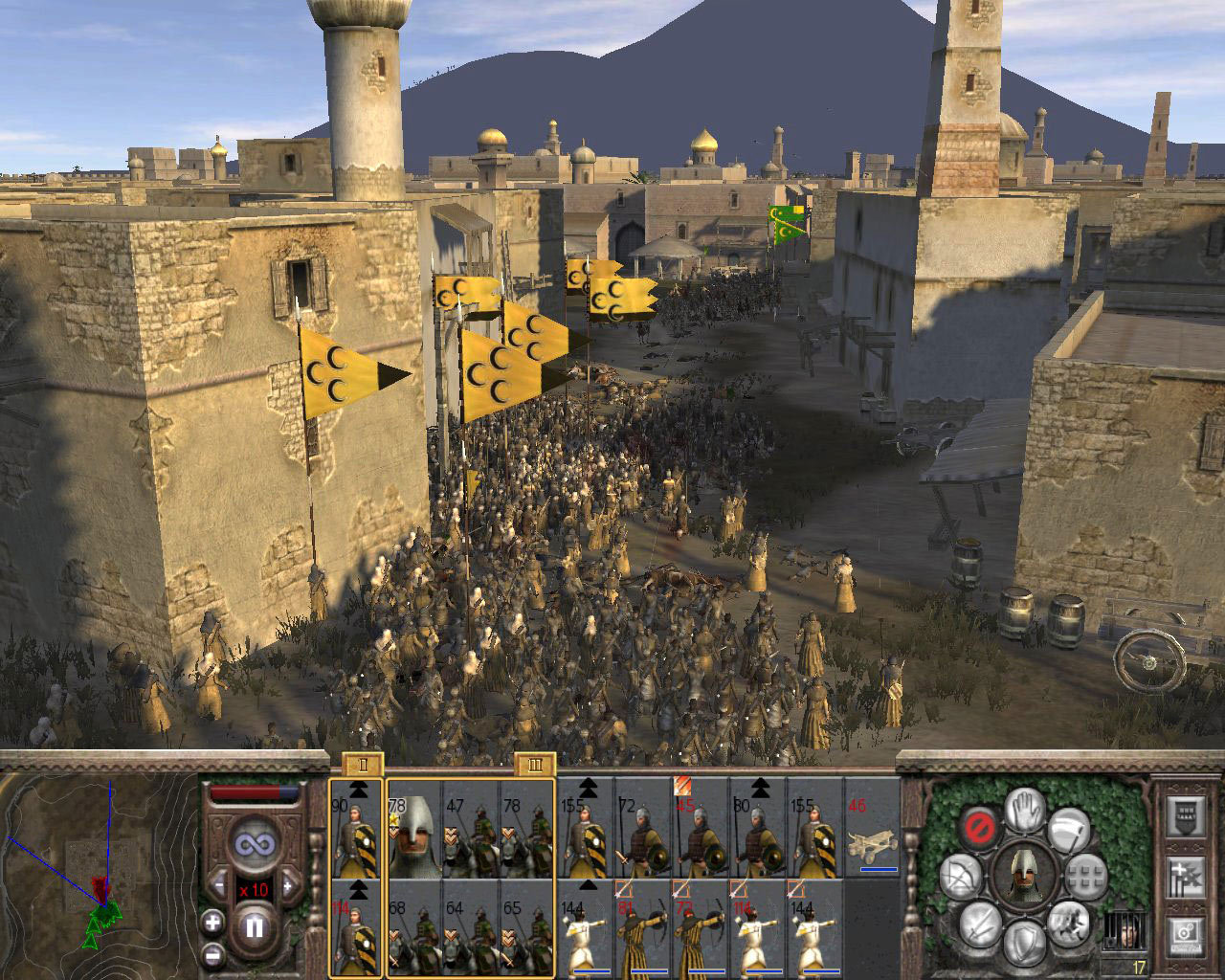
To this day Total War: Medieval II remains one of our favourite games, even nearly 20 years since its release back in 2006. It is one of the most realistic middle-age warfare games available and offers a 3D take on castle building and combat. This version of the popular strategy series (more at the Total War website) is focused on one of the most volatile times in Western history, and building up your empire will not just keep you in the British Isles: it will see you wage war in Africa, the Middle East and the New World.
Build an entire medieval city, one of the most spectacular ever seen in a game, and train your troops in preparation for fights featuring up to 10,000 soldiers on either side! You can also fight against up to seven other players in an epic multiplayer battle. The base game is now the free Definitive Edition, which adds four campaigns from the Kingdoms expansion (Britannia, Teutonic, Crusades and Americas), along with dozens of extra regions across new maps and further multiplayer content.
Stronghold: get your siege on with this medieval real-time combat simulator that borrows elements from other big-hitters of the genre
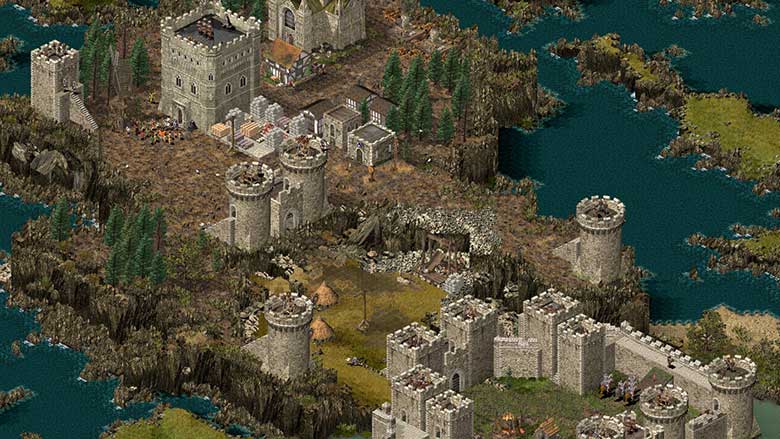
To Siege or Not to Siege
War. There seems to be a lot of it, whether in the modern day or in the annals of history. It is unavoidable, a trade-off of being the species we are, it seems. No matter how terrible war actually is, however, it seems that simulation of war is an entirely different ball game, particularly when it is the borderline glorification of the feudal conflicts of the medieval period and its surrounding centuries.
Rome: Total War and Age of Empires are games that specialise in this sort of thing, but their grandiose nature and staggering quantity of features can put casual gamers off. Stronghold is a siege-centric game that actually portrays real combat in a dynamic fashion, allowing you to get your hands dirty whilst also managing a settlement. There is a lot to be said for this approach in spite of some bare-faced flaws in the game.
Not To Siege
Because Stronghold is essentially a dual-pronged approach to real-time strategy, the whole game is not entirely one-dimensional, in that it does not focus solely on siege warfare whilst providing no respite from this style of gameplay. One of the prongs of Stronghold's real-time strategy fork is the economic campaign, which involves time-sensitive missions based around certain goals like acquiring a minimum quantity of gold or various goods. This aspect of the game plays precisely like other real-time strategy titles, namely the browser-based Tribal Wars 2 or Forge of Empires.
Stronghold's take on the management aspect is rather superficial, however, involving simply building production buildings as well as secondary production centres (i.e. refineries that process the primary resources) to make things like weapons and food. You have also got the usual limiting factors to take care of, such as food quantities for your population, but I found that they can be kept happy and working by simply providing more food, as opposed to performing any deeper actions such as building statues as you do in Forge of Empires.
To Siege!
It is pretty safe to say that Stronghold's true calling, and indeed the sharper prong on the previously mentioned fork of its real-time strategy entertainment, is the military campaign. Here you get to defend yourself against sieges from aggressors as well as lay siege to other castles and strongholds around you. Instead of taking place in a grand, open world as you would find in Age of Empires, you instead have to focus on gaining back the land of your murdered father, one section at a time.
You are slowly introduced to the siege-based action through tutorial levels, starting with only archers to defend your fortifications and then moving on in the later stages to more useful troops such as swordsmen and mace-men, as well as useful individuals like engineers that build your weapons of violent siegery (I am coining that word). It is a little annoying how suddenly things escalate from simple tutorial activities to full-on siege warfare; this is one flaw in the game, though it is certainly not the last.
Four to the Flaw
One of the most glaring annoyances in the game for anyone will be its interface, which does not seem to follow conventional logic or basic associations whatsoever. Reaching the primary menus is easy enough, as things like your farm and food production can be reached through tabs at the bottom of the screen. Various items are positioned in places they do not seem to belong, however, making the whole thing a little awkward and significantly blunting the sharpness of the combat. Unit selection is another aspect where the game falters, separating members of your unit if you select them individually; this can lead to you losing the group associations you spent time making.
The flaws continue with the building mechanics. Do you fancy building just behind that mound of earth over there? Sorry, no can do. You cannot actually build anything that is not in your direct line of sight, which becomes problematic considering the relatively shy and shallow camera angle.
So, to return to my two-pronged fork metaphor from before, it seems that one point of Stronghold's prong is significantly shorter than the other due to the disappointingly shallow economic campaign, but this tired comparison does not end there, no sir. It turns out that the other prong, the game's military campaign, though significantly longer and more useful, is somewhat blunted by the multiple flaws in the interface and building mechanics. This would otherwise be a fantastic game, but these drawbacks are too numerous to forgive developers Firefly Studios for allowing them to be present in the final release of the game.
Stronghold Crusader HD: a significantly improved siege-based real-time strategy that has been through some important changes since the original
Those who experienced the original Stronghold will know that it was a game with its heart in the right place, offering up a rarity in the real-time strategy world: the opportunity to take part in siege warfare where you had control of everything that was happening on the battlefield in front of your eyes. Not even games like Crusader Kings allowed for such dynamic battlefield detail, and Stronghold went ahead and broke those barriers. It was, however, full of flaws and shortcomings, a comedy of errors that developer Firefly Studios have certainly addressed in the most serious of manners in Stronghold: Crusader.
Siege and Onion
So what has Firefly done with its time between the original Stronghold and Crusader? Quite a bit, it seems, and pretty much all for the better as well. Gone are the days of spreading your time between a fairly in-depth siege campaign and the laughably shallow sideshow of the economic campaign. The developers clearly identified this major flaw in the original, which was essentially the dilution of the siege campaign with an unnecessary economic adventure, and have pulled the focus of the game towards siege warfare only.
This tightening of focus has produced favourable results for Stronghold: Crusader, though there are now more modes of gameplay that demonstrate equal awareness of the players' desire for a nothing-but-combat focus. You can play in single-player skirmish mode against AI, for example, presenting you with various challenges ranging from easily-defendable terrain to situations that put you at a distinct disadvantage. This is the kind of challenge that never really presented itself in the original Stronghold game.
Crusade The Day Away
By far the shining highlight of the game is the Crusade trail, a mode comprised of fifty individual battles whose difficulty increases with each victory. As you succeed (or struggle to do so), your passage through time is recorded, with a quicker victory obviously being more beneficial than a slow and sprawling one. This mode involves the building of your own castle, which is a bit of a departure from the military campaign mode of the game.
Veteran players will notice that this time around, some of the game's modes feel more like tailor-made puzzles in battle form, all taking place within some sort of historical context to boot. Many of the missions focus on certain aspects of the game, such as some that require the collection of certain sums in tax form, or others that highlight the pros and cons of archers in the wider context of the game. Experienced players will also appreciate the inclusion of new Arabian units such as horseback archers that are significantly more powerful than many of the units that were in the game before.
It works in Stronghold: Crusader's favour that the military units in the game are much more accessible than in the original Stronghold. This is made possible by doing away with the need to produce massive quantities of resources, allowing you instead to simply produce gold through a marketplace and pay for a military training camp that produces units that can be used almost instantly. Other improvements include the way the happiness of your population is affected (things like religious belief have a more important part now), allowing you to better handle the disgruntled population when you have to raise taxes; you can also just give them access to alcohol and see their happiness rise as well.
A Desert Holiday
If you are used to the grubby and monotonous medieval scenery of the original, the desert landscape you will encounter in Stronghold: Crusader offers up some much-needed variation as well. You will also notice the different music that gives energy and atmosphere to the game. It is a bit of a shame that Firefly Studios has not taken more care to improve the less-than-intuitive interface that marred the experience of the original Stronghold, but at least there have been improvements, mostly in areas where they count. Having more shortcuts to cut out all of the menu-trawling would have been a great addition, but you cannot have it all, can you?
In all, Stronghold: Crusader's problems are much less pronounced than in the original, having a significantly less devastating effect on the enjoyment you get out of the experience. A few more improvements here and there to the interface and unit formations would have resulted in the game being almost perfect.
Stronghold Crusader 2: a solid real-time siege-warfare game
Reminiscent
If you are at all experienced with the previous Crusader title in the Stronghold series, you will be blissfully aware that, like Crusader 2, it marked a break in the medieval-centric scenery of its Crusader-less titles. Returning in Crusader 2 are a bunch of the original's units including several types of mercenaries, a variety of campaigns including ones that involve skirmishing against AI enemies, and, this is where things take a turn for the disappointing, a return of the clunky and less-than-impressive game engine from Stronghold 3. Oh dear.
Let us not let the negatives get us down this early in proceedings, however: Crusader 2 has a lot to offer, after all. As a castle-building game and real-time strategy, the emphasis is on the establishment of a settlement that is defended by a castle and that has its own mini-economy consisting of production buildings that provide things like the stone for your castles, the money for your so-called economy, and the troops that will supplement your castle walls' defenses. You will be treated to two tutorial levels that will show you the ropes if this is your first time treading the treacherous grounds of the Crusader series.
A Recourse for Resource Management
Even if you are not familiar with Stronghold's previous forms, however, you are not going to be in a world that is even slightly aloof from that of a standard real-time strategy. When it comes down to it, you are simply juggling resources as you are in games like Kingdom Tales 2, Forge of Empires, and Tribal Wars. The only difference here is that the balancing of resources is not in the foreground or by any means the main aim of the game; the resources are merely a vehicle to facilitate the building of castles and the siege-related warfare that makes Crusader 2 so fun to play.
In fact, the process of building your castle from the ground up from resources you have produced is quite a satisfying feeling, and is definitely a factor that somewhat redeems the poor (and recycled) game engine. It is all about erecting your castle, increasing the range of your archers and the effectiveness of your other troops, and generally ensuring that you have an advantage over your attackers. Slightly less fun is the act of besieging someone else's castle, but it makes a welcome change from being the defender all of the time.
Lacking in Smarts, A Shortfall in Sense
Drilling in the disappointment for me is the fact that the AI in the game really is not up to scratch, so much so that you even find yourself having to constantly manage your own troops quite closely whilst they go about their stupid, stupid business. It is a little silly that you can only build castles in certain squares that are designated by the game, and even sillier is the fact that archers are the go-to unit, a sort of panacea for all of your siege-related ailments since they are so very cheap and relatively effective in relation to their price.
Bugs really abound in this game as well, and you will often find yourself losing out on large sections of your fortifications because of lacklustre pathfinding, a feature common to all RTS games that is usually spot-on but in this case is quite shocking on occasion. This results in troops getting trapped where they should not be, usually rendering them useless. The "epic" final scenes that involve dominating the lord of the castle you are attacking also seem to last a ridiculously long time.
If you were to take Stronghold: Crusader II in isolation from its predecessors, one would be reasonably happy with Firefly Studios' effort. Unfortunately, much like the cracks in Battlestar Galactica's ship in the later series, Stronghold: Crusader II's problems run through to its core, namely the game engine itself, which needs a serious rework if Firefly Studios are anywhere near being equally serious about finally releasing a Stronghold game that is not marred with bugs and shortcomings. Put simply, this was 2014; we expected better than what Crusader 2 barely managed to muster up.
Banished: a back-to-essentials city-builder with a wonderful medieval twist and a highly original premise
It has become sort of standard procedure for many medieval PC games to be of the real-time strategy genre. You will not find all that many that are not about armed conflict either, in some way or another. You have got things like Age of Empires, Medieval: Total War, Crusader Kings, and Stronghold proving this point, and that is just off the top of my head. It is a little rarer to see a game of the city-builder genre occupying the harsh conditions of the middle ages, however. For this reason, Banished instantly had my attention piqued from the outset. Forget the luxury of having your own choice of kingdom to rule over: you are among a group of unfortunates who have been banished from relative comfort. This is not a game where you build prosperity; it is about pure survival.
You will start out in Banished during the season of Spring, a time that is ripe for all of the planting and building you will be doing in the initial stages of the game, in the form of mini-goals set for you by the game. The tutorial is seriously good at introducing you to the practical aspects of the game by giving you manageable chunks of information, getting you to perform various tasks like planting and managing your assets, and, most importantly, it lets you experience first-hand the harshness you will be facing quite frequently throughout, giving you a comprehensive knowledge of what you need to do in a practical and immersive fashion.
A great example of Shining Rock Software's delightfully direct approach is having you plant and build yourself to a reasonable level during the initial Spring, Summer and Autumn months, then showing you just how harsh the winters can be by immersing you in a full-on freeze that is going to kill a fair amount of your crop and even your population. You simply do not get this kind of respectful treatment from games like Stronghold; it is as if the developers are treating you like an adult.
Build to Survive
In the early stages, you will be performing tasks such as gathering resources like firewood and food as well as building houses for your population of fellow banish-ees. It is the cycle of the seasons, a very simple idea in its own right but one that is vastly effective at adding a new dimension to survival strategy, that is the driving force here, forcing you to be as resourceful as possible with the space you have. You will have to chop down trees to fit in growing areas for your crops as well as living space for your people, both of which you will be short of in the initial seasonal cycles because, well, that is how the game gets you to learn what it is all about.
This is one of the few games of its type in existence where your population itself is considered as much of a vital resource as food or firewood. If any of your population snuffs it because they were outside too long, did not get enough food, or did not have access to essential medicines, then the burden is increased for the rest of your population, since production of resources takes a hit which in turn puts more of a squeeze on the remaining survivors.
Remember the natural disasters of legendary building sims like Sim City? They are an integral part of the cycle of time in Banished as well, only there is a wider variety of them. Diseases can spread through your population, testing the state of its health. A tornado sweeping through your settlement will demonstrate how resilient your population is and how well you are able to rebuild. These disasters essentially act like random inspections by force, prodding at different aspects of your infrastructure and reminding you in the harshest of ways which bits need bolstering and which are fit for purpose. Do not underestimate them, however: just because they are a test does not mean that a blight in your crop will not absolutely devastate your population.
Positively Bleak
The best description of the gameplay I can give for newcomers is "positively bleak", meant in the most complimentary of ways. Unlike other games where you can simply wait a while and get a comfortable quantity of resources restocked, you are always on the verge of struggling in Banished, whether that be because of a tornado, a fire, crop death, or your failure to control and increase the population numbers.
Imagine the most complex relationship of systems of any other game and multiply that by ten: this is how intricately woven the different systems and infrastructures are in Banished. You have to take the cost of everything into account as well as the risks of your actions, thinking ahead a few seasons to see how much firewood your loggers need to acquire, how much food your population needs and will need in the future, and how well you will handle natural disasters. Banished is definitely the most delightfully morose game I have ever played, and has one of the best and most pleasantly minimalistic building-sim interfaces out there today.